OPUS printing systems
Own the system
behind the build.
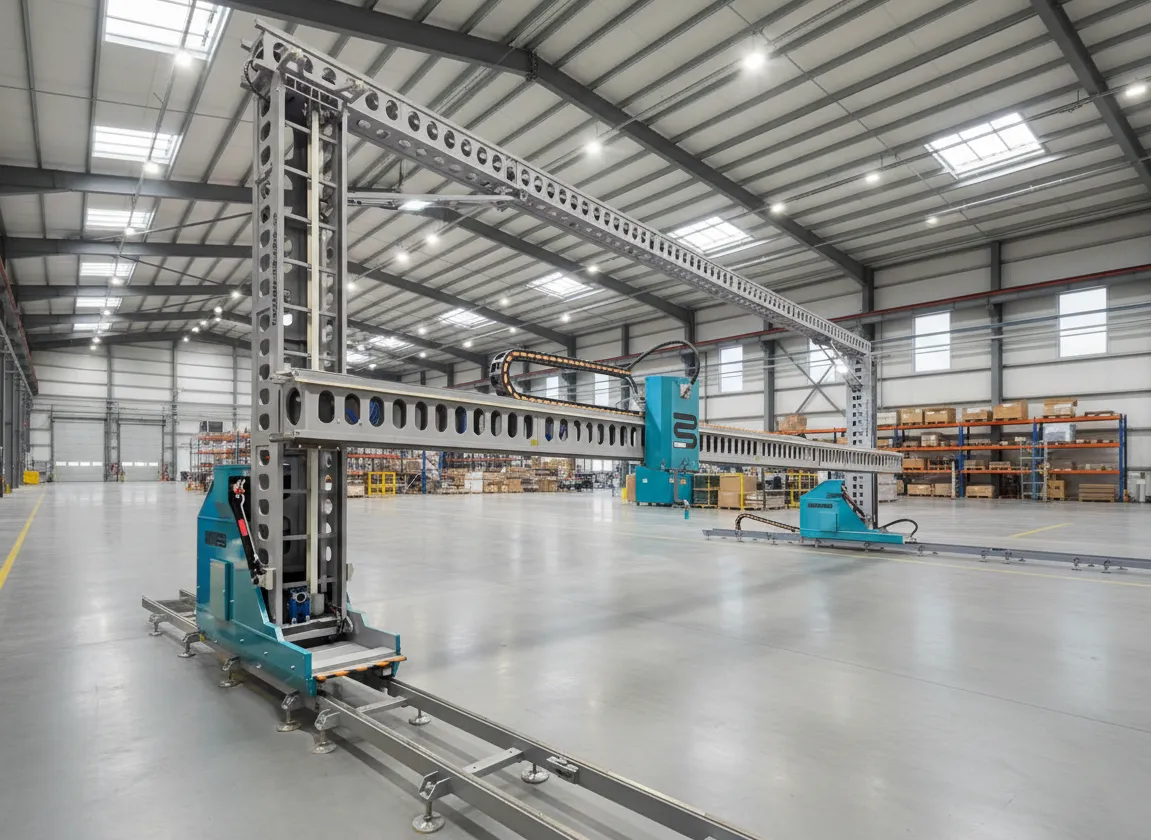
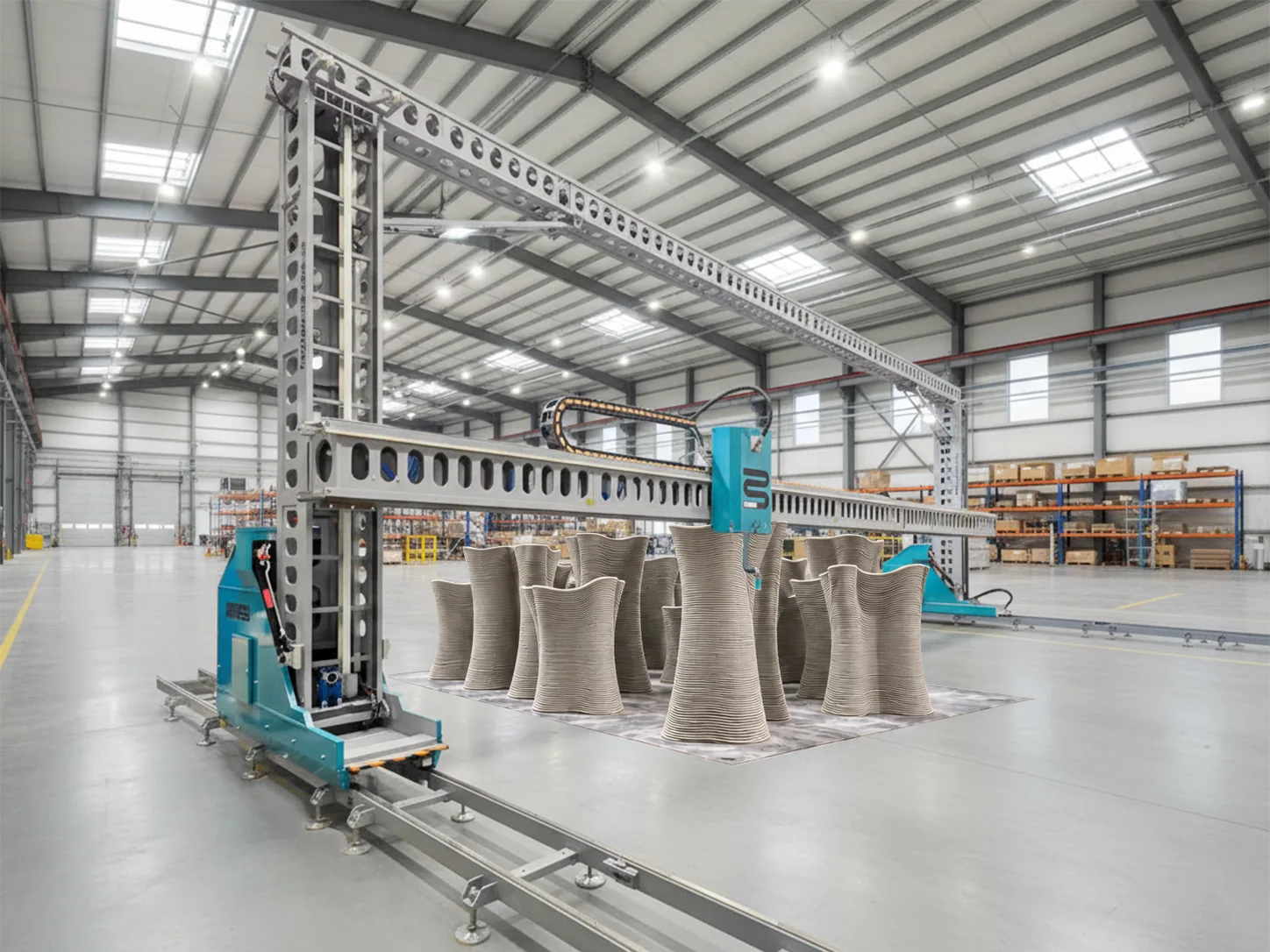
OPUS 4 is Contour3D's large-format 3D concrete construction printing system, designed and built in Australia for on-site and factory production.
Australia's No.1
3D concrete printing system.
OPUS 4 pricing
Priced for your project
Tell us what you are building and where, and we will send a quote.
- Delivery
- Confirmed at order
- Freight
- Quoted
The programme is set with you when the order is placed.
Once the destination is supplied.
The package
What the price buys
- Included
OPUS Gen 4 printer
The gantry, drives, printhead and e-chain hose management.
- Included
Pump and silo
Mobile material delivery, integrated with the OPUS control system.
- Included
C3D control system and software
Industrial PLC, motion controller, ruggedised tablet HMI and OPUS Slicer.
- Included
Transport racks
Built for compact storage and fast deployment.
- Included
Hard carry cases
For the desktop control equipment and screens.
- Included
Tool kit and key spare parts
For the mobile batch plant and the printer.
- Included
Five days training
At Contour3D head office, Kurnell NSW, training materials included.
Total
Not included
- Freight and delivery, quoted once the destination is supplied.
- Travel and accommodation for the training days.
- Contour Cloud subscription.
- Technical support once the included hours are used.
- Material supply beyond the training materials.
Field proof
Printed with OPUS
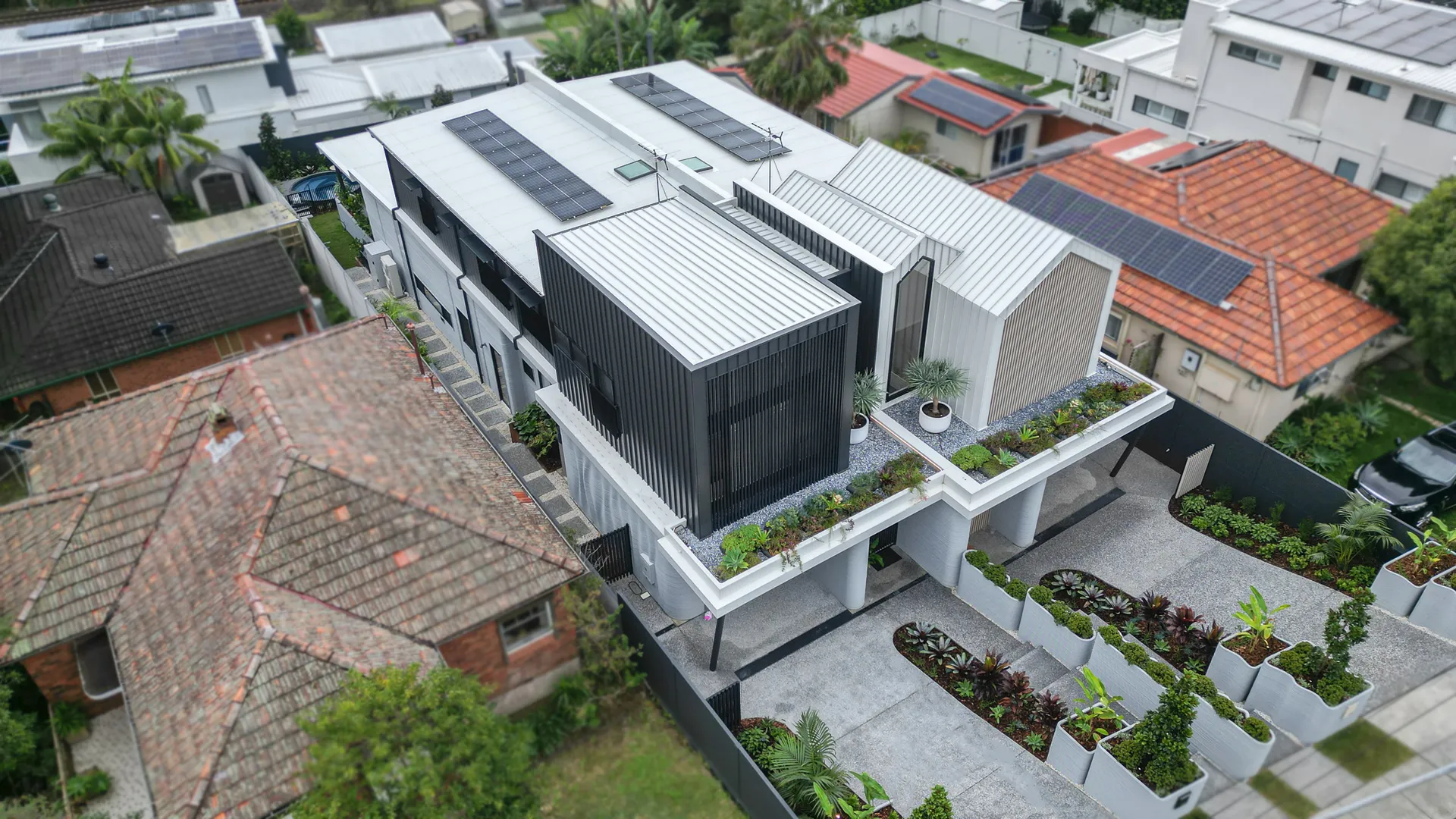
Measured on the Genesis duplex at Woolooware, printed with this system.
- 140 t
- ContourCrete printed
- 1.5 t/hr
- Sustained dry throughput
- 13–18 min
- Per wall section
- Zero
- Critical failures
At a glance
OPUS 4, by the numbers
- Printable width
- 12.5 m
- Printable length
- 25 m
- Printable height
- 3.2–3.8 m
- Print speed
- 150–250 mm/s
- Accuracy
- ±1 mm
- Machine weight
- ~2,500 kg
- Target throughput
- 0.5–1.5 m³/hour
standard, expandable to 15 m
extendable in 5 m sections
traverse to 500 mm/s
repeatability ±0.5 mm
plus transport racks
depending on bead width, layer height and pump selection
Transport and deployment
From transport to printing
Ground-level assembly with a forklift and basic tools. No mobile crane, and printing the same day.
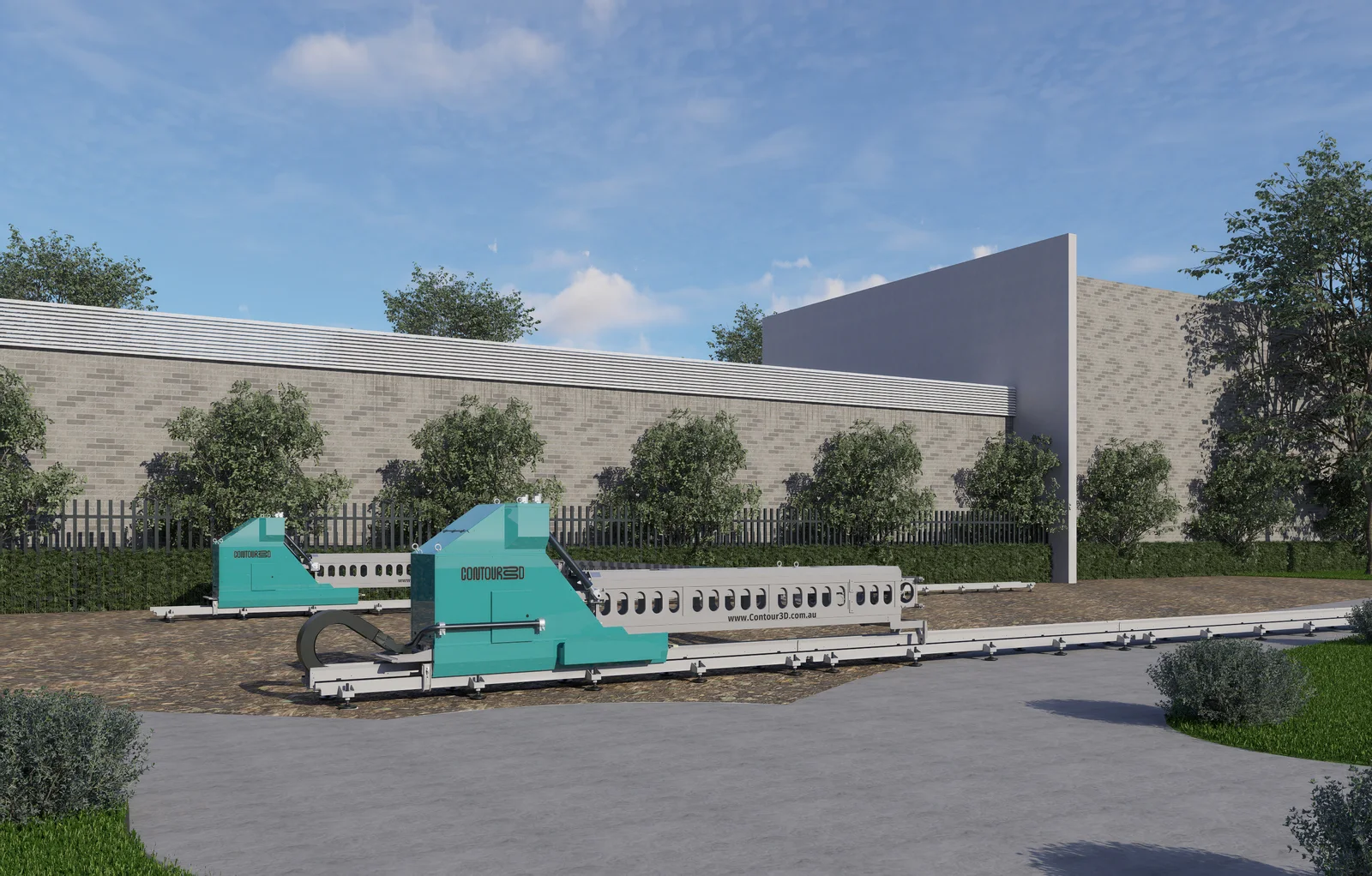
01 · Packed and at ground level
Tracks and frame assemble on the pad with basic tools and a forklift. No mobile crane.
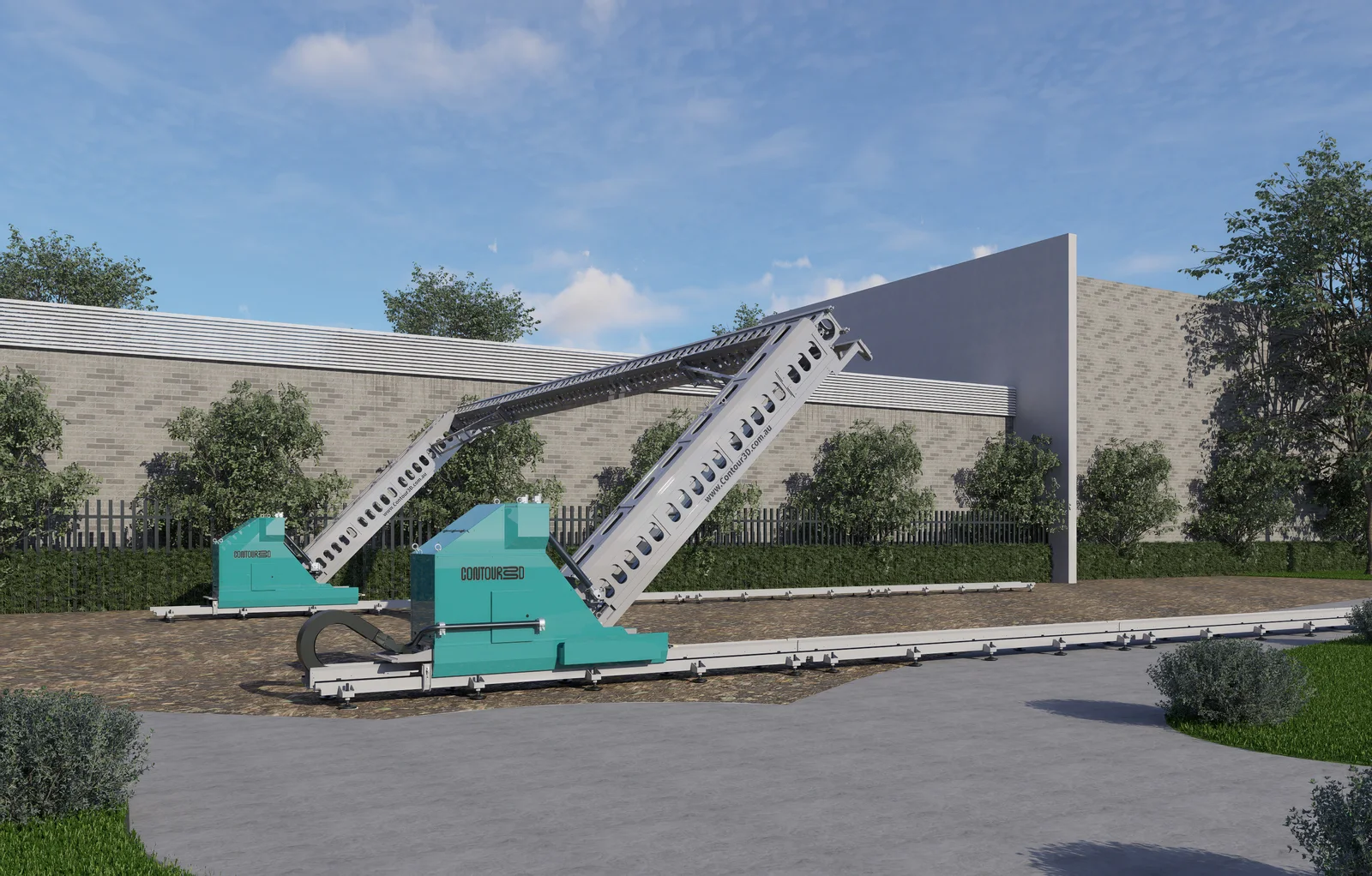
02 · Raised under hydraulics
The hydraulic Z-axis erection system lifts the mast. The truss and track spigots self-align.
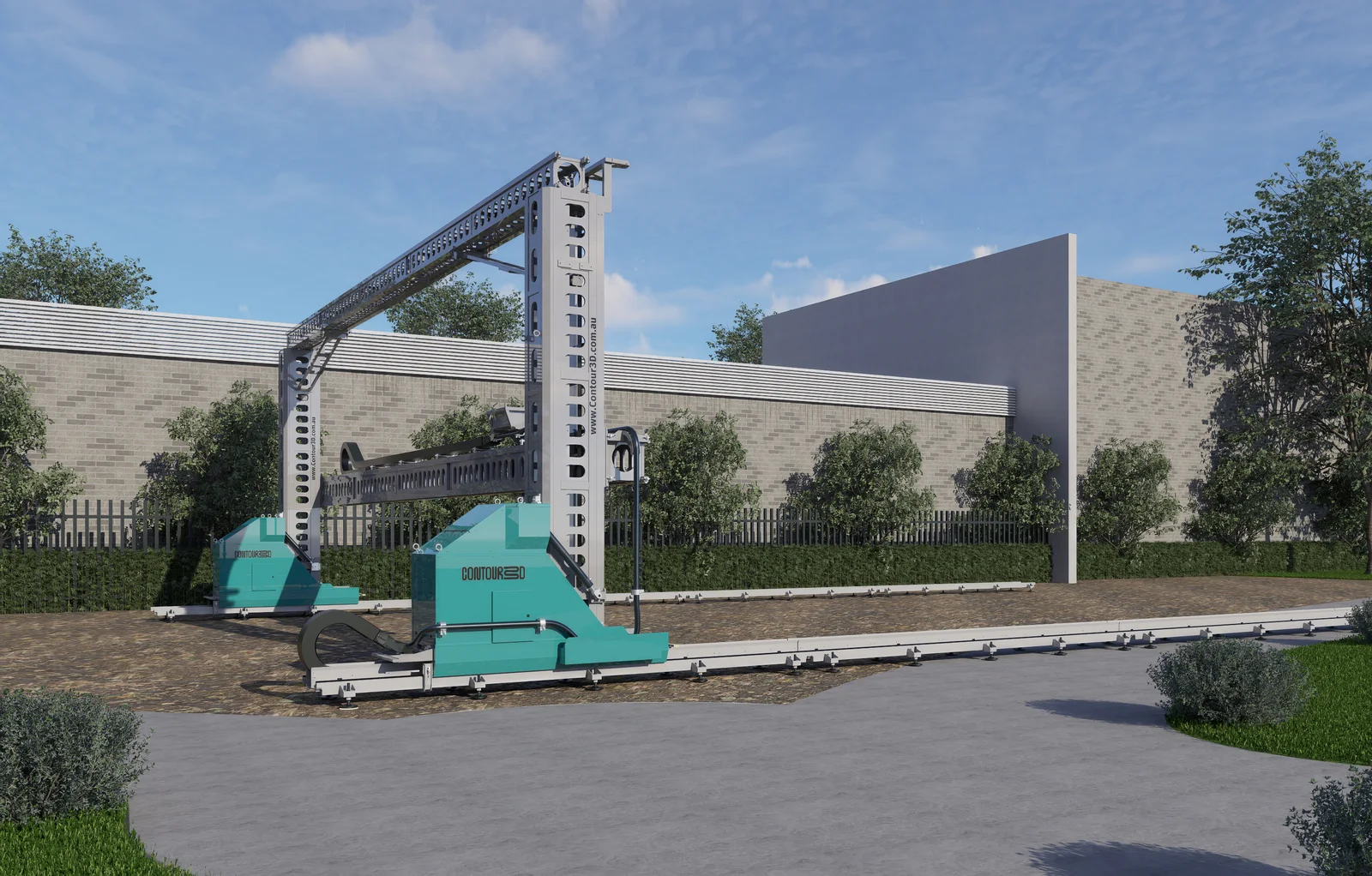
03 · Ready to print
The clamping system sets the printer width on site. Typical full setup is 3 to 5 hours with a small crew.
Setup
3–5 hours
Typical, with a small crew.
Width on site
12.5 → 15 m
Set by the clamping system.
Length
+5 m modules
Track extends as the job needs it.
Australian engineering
Designed. Built. Supported
The people who built your machine are the people who answer the phone.
Warranty
12 months
From delivery.
Training
5 days
At Kurnell, materials included.
Quality assurance
5 cameras
Logging every layer, with a job report at the end of each print.
Support
Remote
5G or Starlink. With your permission we read the machine's data without attending site.
Two ways in
Buy it or rent it
Buy OPUS 4
Build your own capability
For organisations building construction-printing capability in-house, on their own programme.
Purchase
Quoted on enquiry
Freight quoted once the destination is supplied.
Rent OPUS
Use it on one project
For projects where owning the system is not the point. We bring the printer, the material system and a trained operator.
Rental
Quoted per project
Tell us what you are building and where, and we will price it.
Technical detail
The detail
Layers, power, site, weather, safety and servicing, straight from the specification.
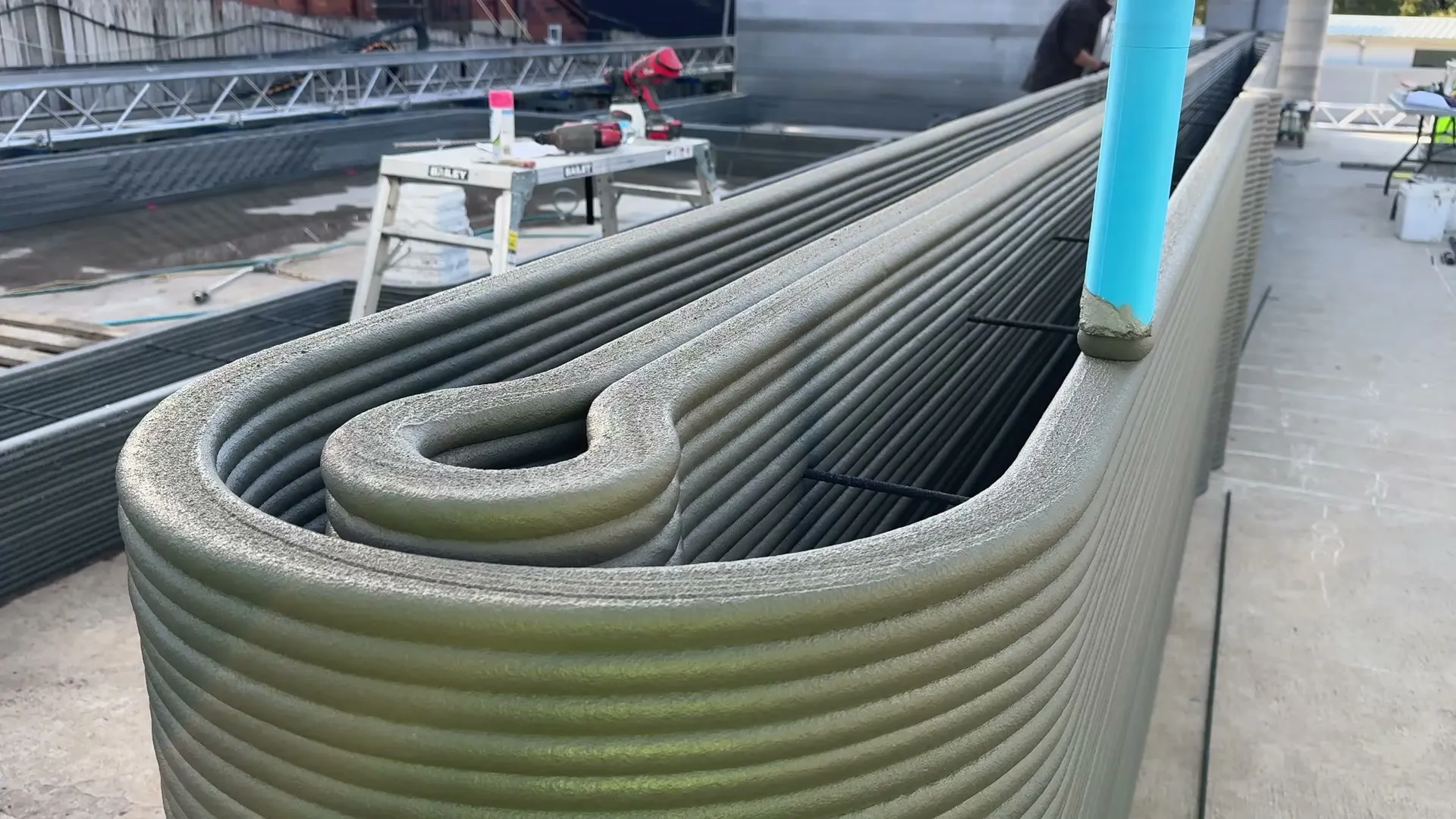
Layers, beads and nozzles
- Typical layer height 20 mm.
- Range 5 to 40 mm, dependent on nozzle and mix.
- Compatible with ContourCrete variable bead widths.
- Supports round, rectangular and custom nozzle shapes.
Power and utilities
- Three-phase 380 to 480 V for the gantry and silo.
- A mobile configuration may run on single-phase 230 to 240 V with the correct generator.
- Recommended generator buffer: 25% above peak load.
- Integrated air compressor for pneumatics and nozzle purge.
- Peak consumption varies with the pump and heater configuration.
What does my site need?
- A flat, compacted working pad.
- Clear access for the batching trailer and a forklift.
- Electrical supply on site, or a generator.
- Recommended minimum working area 20 m × 20 m.
- Pump within 50 m of the printhead, and within 15 m for the highest efficiency.
- Weather consideration: shade, shielding and drainage.
- Defined safe working zones and exclusion areas.
Operating conditions
- Operating temperature 5 °C to 45 °C.
- An integrated weather sensor station feeds the slicer's compensation curves, which adjust for curing, strength gain and environmental delays.
- Wind shielding is recommended on exposed sites.
- Faster-setting mixes are available for extreme conditions.
Safety
- Dual emergency bumpers.
- Local and remote emergency stop.
- Mechanical guarding and lockout-tagout points.
- Assembly sensors that prevent incorrect installation.
- Integrated system warnings and shutdown logic.
Maintenance and spares
- Daily checks: pump seals, nozzle wear, scraper condition, lubrication points and a visual check of the guide rails and encoders.
- Cavity pump rebuild every 500 hours.
- Motion rail lubrication and inspection every 20 hours.
- Recommended spare kit: nozzle plates, pump seals, pressure transducers, motion encoders and a spare carriage linear guide set.
- Remote diagnostics let our technicians identify and resolve issues without attending site.
Questions
Anything else
What is OPUS 4?
A mobile, modular large-format concrete 3D printer, designed and manufactured by Contour3D for both on-site construction and factory-based prefabrication.
What can OPUS 4 print?
Structural walls for houses, duplexes and townhouses, civic and commercial buildings, industrial pods, site offices and modular structures, landscape elements such as stairs, planters and benches, and curved or bespoke architectural forms.
Can OPUS work on site and in a factory?
Both. It is designed for on-site construction, and a factory printing station configuration is available. The transport racks and the modular frame exist so the same machine can do either.
What material does OPUS print?
ContourCrete, our own printable mix, with variable bead widths. The material is covered in full on the Technology page.
What software prepares and runs a job?
The C3D control system: an industrial PLC with a real-time motion controller, a ruggedised tablet HMI and OPUS Slicer for parametric job preparation. The Technology page covers the software in full.
How is print quality recorded?
Five integrated QA cameras, per-layer timestamp logs, volumetric flow reports, mix batch IDs and environmental data, uploaded automatically and exported as a job report at the end of every print.
Does OPUS support remote diagnostics?
Yes. OPUS is 5G or Starlink ready, and with the operator's permission our technicians can read diagnostic data, sensors and camera feeds remotely without attending site. The mobile connection is supplied by the customer.
How much does OPUS 4 cost?
Pricing is quoted for your project. Enquire and we will send you the current OPUS 4 price, with freight quoted separately once the destination is supplied.
What is included?
The OPUS Gen 4 printer, pump and silo, the C3D control system and software, transport racks, hard carry cases for the control equipment and screens, a tool kit and key spare parts, and five days of training at our head office with materials included.
Is freight included?
No. Freight and delivery are quoted separately once you tell us where the machine is going.
What training is included?
Five days at Contour3D head office in Kurnell, NSW, with training materials included. Travel and accommodation are not included.
What warranty is provided?
Twelve months from delivery.
How long does setup take?
Typically 3 to 5 hours with a small crew. Assembly is at ground level with a forklift and basic tools, and the mast is raised by the hydraulic Z-axis system, so no mobile crane is needed.
Can I rent OPUS instead of buying?
Yes, for suitable projects. Rental is quoted per project, so tell us what you are building and where.
Does rental include an operator?
Yes. Rental is the printer, the material system and a trained operator.
Is travel and accommodation included with the training?
No. The five training days and the training materials are included; travel and accommodation to Kurnell are not.
Can I see OPUS operating before I buy?
Yes. Book a factory tour and we will show you the machine and the work coming off it.
Next step
Come and see it print
Book a factory tour, or send us the job you have in mind and we will tell you straight whether OPUS suits it.